
Eyes - The Horror Game
Fearless Games sp. j.Adventure
4.515.48K Reviews
- Version
- 8.1.1
- Installs
- 100.00M
- Age Rating
- Teen
Screenshots

Our Review of Eyes - The Horror Game
 Analysis by Appyee
I went into Eyes Horror & Coop Multiplayer expecting a quick scare, but it works better when treated as a tense adventure game that rewards patience. Its basic idea is simple: explore frightening spaces, search for a way forward, and try not to lose your nerve when the game turns quiet. That simplicity is part of its appeal. I never needed a long tutorial to understand the mood, yet the atmosphere still gave me reasons to keep moving.
The game is free to download, developed by Fearless Games sp. j., and sits in the Teen category. It has built a remarkably large audience, with over 100 million installs, an average score of 4.5 from around 893 thousand ratings, and roughly 15 thousand written reviews. Those figures suggest that it is more than a niche horror experiment, but popularity does not make every session comfortable. The experience is deliberately built around tension, sudden scares, and the risk of making a bad decision while exploring.
My recommendation is fairly specific: this is a good choice if you enjoy mobile horror that can be played in short bursts or shared with friends, especially when you like learning a map through repeated attempts. It is less suitable if you want a relaxed adventure, a heavily guided story, or a game that lets you disable every stressful surprise. The fear comes from uncertainty, and that can be exciting or tiring depending on what you want from a phone game.
How the current version feels to play
I find the current version works best when I give each attempt a small purpose rather than trying to rush through the frightening parts. I use what I learn from one run to make the next route more deliberate, which keeps mistakes useful instead of merely frustrating. From there, it makes sense to look at the settings and personal choices that can shape how intense a session feels.
A straightforward horror loop with room for mistakes
The strongest part of the game is the way it turns ordinary exploration into a problem. Moving through a dark location is not interesting because walking itself is complex; it is interesting because every corner may change what I think is safe. I found myself slowing down, checking paths twice, and remembering places that seemed unimportant earlier. That mental map becomes valuable, particularly when panic makes a familiar route feel confusing.
The adventure structure is easy to understand without being completely predictable. I search, investigate, react to danger, and try again when a run goes badly. This makes the game approachable for someone who rarely plays horror titles on a phone. At the same time, repeated attempts are not just a matter of tapping through the same sequence. My own caution, timing, and knowledge of the surroundings affected how each attempt felt.
That design also explains why the game can be more enjoyable with headphones, provided you are comfortable with sudden audio cues. Sound helps me judge the mood before I see anything, but it also makes the experience more intense. Playing in a bright room reduces some of the pressure, while playing alone at night makes the same scenes feel much more aggressive. I would not call that a flaw, but it is worth deciding how much fear you actually want before starting.
Cooperative play changes the emotional balance
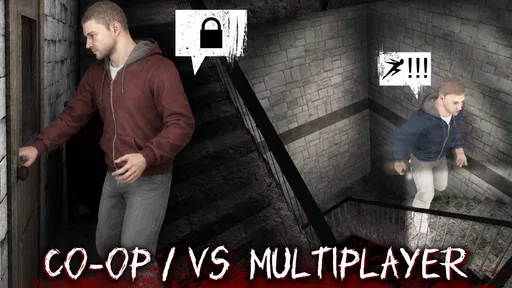
The multiplayer angle is not simply a decorative extra. Playing with another person changes the rhythm of horror. A friend can make the game funnier, reduce the feeling of isolation, or create a new kind of tension when both players disagree about which route is safe. I enjoyed that contrast because the game can move from nervous silence to frantic conversation very quickly.
Cooperation also exposes a trade-off. If one player treats the session like a joke and constantly talks over the atmosphere, the scares lose some force. If both players communicate carefully, the shared decision-making becomes part of the challenge. I found it best to agree on a simple plan before entering an area: who explores first, when to regroup, and whether to continue after a close call. That small habit made multiplayer sessions less chaotic without removing the suspense.
This is a useful choice for a casual evening with a friend who likes horror but may not want a long, complicated game. It is not the best fit for a group looking for a deep team-based system with extensive roles, detailed progression, or competitive balance. The cooperative appeal comes from shared fear and problem-solving rather than from a large collection of specialized mechanics.
What the latest version means for returning players
The current release is version 8.0.88, and the game originally arrived on February 14, 2013. That long span matters because the title has had time to become a familiar mobile horror experience rather than a brief novelty. For someone returning after a long break, I would approach it as an established game with a recognizable identity, not as a completely redesigned modern adventure.
The version number is useful context, but I would not treat it as a promise that every part of the game will feel new. Existing players are more likely to notice the overall polish and continuity of the experience than a single dramatic change. In my view, the important question is whether the current build still delivers the kind of tense exploration that made the game appealing in the first place. It does, although the underlying loop remains intentionally focused.
New players should give themselves time to learn how the game communicates danger. The first session can feel more confusing than frightening because I was still working out which sounds, spaces, and discoveries deserved attention. Once I stopped rushing, the atmosphere became more effective. Returning players, meanwhile, may appreciate the familiarity but could find less surprise if they already know the main patterns.
Free entry, optional spending, and practical expectations
The game can be played for free, with in-app purchases ranging from $0.99 to $5.99 per item. That makes it easy to test without committing money first, which is exactly how I would approach it. I would spend time with the core experience before deciding whether any optional purchase genuinely improves my enjoyment. Horror games depend heavily on atmosphere, so buying something does not automatically make the scares better.
The free entry point is especially useful for friends who want to try cooperative play together. Nobody has to make a financial decision before discovering whether the tone works for them. On the other hand, players who dislike any form of optional spending may prefer to review the purchase prompts carefully and keep their sessions focused on the free experience. I found that setting a personal limit beforehand is sensible, particularly for younger players covered by the Teen rating.
There is also a practical reason not to rush into purchases: the game’s main appeal is learning how to handle fear, not collecting advantages as quickly as possible. If I buy my way past every frustrating moment, I may reduce the very uncertainty that makes exploration interesting. That is a personal trade-off, but it is an important one for this particular style of horror.
Small habits that make exploration less frustrating
My first useful adjustment was to stop treating every scare as a signal to sprint. Running without a plan often made me lose track of where I had been, which created more confusion than safety. A better approach was to pause after a startling moment, identify the nearest recognizable landmark, and then choose a direction deliberately. This sounds basic, but it makes repeated attempts feel more like learning than random failure.
I also recommend playing in shorter sessions when the tension starts to blur your attention. After too much time, I began reacting to every sound in the same way, and that made me careless. A brief break helped me return with a clearer sense of what I was investigating. This is one of those mobile games that benefits from being played in focused pieces rather than forced into a long sitting.
For cooperative sessions, voice communication is useful, but constant commentary is not. I got better results by sharing concrete information: a direction, a landmark, or a warning that something had changed. Vague shouting made both players move badly. The game becomes more enjoyable when communication supports observation instead of replacing it.
Finally, I would avoid judging the game during the opening minutes alone. Its strongest moments depend on uncertainty building gradually. If I rush through the early section while looking for immediate action, I miss the way the environment establishes pressure. The game is more effective when I let the quiet parts do some of the work.
Where it sits beside other mobile horror games
Compared with horror games that focus on combat, this one puts more weight on vulnerability and escape. That makes it a better choice for me when I want suspense rather than constant action. Players who prefer weapons, upgrades, and direct battles may find the experience too restrained. A combat-heavy alternative would offer more control, while this game gets much of its effect from limiting how confident I feel.
It also differs from story-first horror adventures. Narrative-focused games usually guide me through carefully staged scenes and character moments. Here, the act of exploring and surviving carries more of the experience. I can appreciate that because it leaves room for personal reactions, but anyone seeking a strongly cinematic plot may want something with more explicit storytelling.
Against simple jump-scare apps, it has more staying power because the surroundings and repeated attempts matter. A single scare can be memorable, but it rarely supports many sessions by itself. This game gives me a reason to understand the environment, experiment with routes, and try cooperative strategies. The limitation is that its focused structure may eventually feel repetitive to players who need constant new mechanics.
Who should play it, and who should skip it
I would recommend it to horror fans who enjoy being uneasy without needing a complicated control scheme. It is also a good match for friends who want a shared scare session, families with older teenagers who are comfortable with the Teen rating, and mobile players who like games that can be revisited after learning from a failed attempt.
I would skip it if you are sensitive to jumpscares, dislike dark or stressful exploration, or want a game that feels rewarding even when played casually with no attention. I would also look elsewhere if your priority is a large role-playing system, competitive multiplayer, or a long, clearly narrated campaign. The game knows what it wants to be, and that focus is both its strength and its boundary.
Device expectations are straightforward: the minimum operating system is Android 7.1. Before installing, I would still make sure the phone has enough free space and that the operating system is supported. I would also use a stable connection when planning a cooperative session, since interruptions are especially annoying when both players are already deep into a tense moment.
Remaining gaps and the questions I would ask before installing
The biggest limitation is variety over the long term. The central loop is effective, but it does not transform into a completely different game after a few sessions. Players who enjoy mastering one horror environment may see that as a positive. Players who need frequent new locations, systems, or objectives may feel that the tension loses strength once the unknown becomes familiar.
Another gap is that the emotional experience depends heavily on the player’s mood and setup. The same scene can be frightening with headphones and underwhelming during a noisy commute. That means it is not always the ideal game for every mobile situation. I would choose it for a quiet room and a focused session, not as background entertainment while multitasking.
A common practical question is whether it is worth trying alone before inviting a friend. I think so. A solo session teaches the basic rhythm and helps reveal whether the atmosphere works for you. After that, cooperative play feels more meaningful because you can compare reactions instead of learning every element at once.
Another question is whether the game is suitable for younger children. The Teen rating is the clearest guide here, and I would follow it rather than assuming that a simple mobile presentation makes the horror harmless. The combination of frightening imagery, suspense, and jumpscares can affect players differently. I would let the intended age guidance and the individual player’s tolerance shape that decision.
It is also reasonable to ask whether the free version is enough to judge the game. In my opinion, yes. The free starting point lets you test the controls, atmosphere, and multiplayer appeal before considering optional purchases. If those basics do not hold your attention, spending more is unlikely to solve the problem.
What I would watch in future updates
For future development, I would pay attention to how Fearless Games sp. j. keeps the experience fresh without weakening its simple horror identity. New content would be most valuable if it encouraged different exploration decisions rather than merely adding more places to walk through. Variety in routes, surprises, and cooperative situations could extend the game’s life while preserving the tension that makes it recognizable.
I would also watch how the multiplayer experience continues to fit into the wider game. Cooperative horror works best when teamwork changes the way players interpret danger, not when one person simply follows another. Improvements that make communication clearer or give friends more reasons to coordinate would have a stronger effect than additions that only increase noise.
For existing users, the sensible approach is to update when convenient, revisit the game with a friend, and judge changes by how they affect tension and replay value rather than by version numbering alone. For newcomers, the current build is a low-risk entry into mobile adventure horror: free to try, established over many years, and supported by a very large player base. Just keep expectations focused. This is a fear-and-exploration game first, not a full action adventure.
After spending time with it, I see why it has remained visible among mobile horror games. It creates memorable moments from limited information, makes cooperation feel personal, and does not bury its basic idea under unnecessary complexity. Its weaknesses are equally clear: repetition can appear, the scares are not for everyone, and players wanting deep progression will likely outgrow it.
My final advice is to try it with headphones, play the first session patiently, and invite a friend only after you understand the basic rhythm. That gives the atmosphere room to work and makes the cooperative mode more enjoyable. If you want a free mobile adventure built around suspense, discovery, and sudden shocks, Eyes Horror & Coop Multiplayer is worth your time. If you want comfort, constant action, or a heavily scripted story, there are better alternatives for you.
Verdict
Strengths of Eyes - The Horror Game
- Cooperative multiplayer makes the horror experience more enjoyable with friends.
- Short sessions are convenient for quick gameplay.
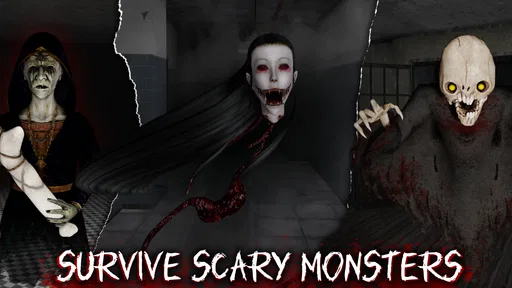
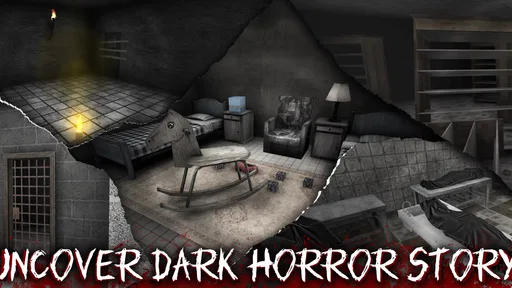
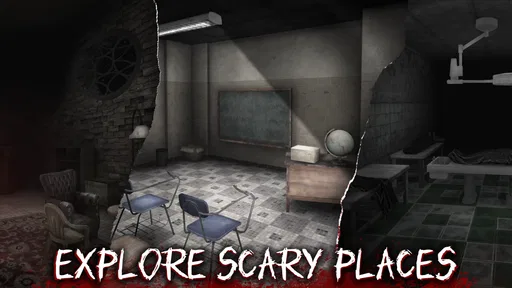
- Dark visuals and sound effects create a tense atmosphere.
- Simple controls make it easy for new players to start.
- Different objectives add variety beyond simply escaping.
Limitations of Eyes - The Horror Game
- Online matches may depend heavily on having active players.
- Fear effects can feel repetitive after several rounds.
- The dark environments may be difficult to navigate on small screens.
- Some matches can become frustrating when teammates disconnect.
- Performance and loading times may vary across older devices.
Similar Picks in This Category
View All
Roblox
Roblox Corporation4.2

Pokémon GO
Niantic, Inc.3.5

Ninja warrior: legend of adven
TOH Games4.6

Ninja Arashi
Black Panther4.6

Critical Action:Gun Strike Ops
FPS Shooter & Action Game4.3

Car Parking Games - Car Games
Frolics Simulation & Action Games4.3
Frequently Asked Questions
What is Eyes Horror & Coop Multiplayer about?
Eyes Horror & Coop Multiplayer is a survival-horror game in which you explore haunted locations, collect valuable items, and try to escape while being hunted by supernatural creatures. Its main appeal is the combination of tense exploration, sudden scares, and multiplayer cooperation. You can play with friends, communicate during a match, and work together to survive, although panic and poor coordination can quickly make the experience much more difficult.
Can I play Eyes Horror & Coop Multiplayer alone, or is an internet connection required?
The game is designed primarily around online multiplayer, so an internet connection is generally needed to access cooperative matches and play with other people. Depending on the available modes and version, solo play may also be possible, but the experience is more demanding without teammates to distract enemies or help complete objectives. A stable connection is recommended to avoid lag, disconnections, or interrupted sessions.
Is Eyes Horror & Coop Multiplayer suitable for children?
Parents should consider the game’s horror presentation before allowing younger players to download it. It includes dark environments, frightening monsters, chase sequences, jump scares, suspenseful sound effects, and themes involving danger and death. The exact age rating can vary by platform and region, so checking the Google Play or App Store listing is important. Children who are sensitive to scary imagery may find it uncomfortable.
Does the game include ads, in-app purchases, or other optional payments?
Eyes Horror & Coop Multiplayer may use advertising, optional purchases, or other monetization features depending on the platform, region, and current version. These elements can sometimes provide convenience or support the developers, but they are not necessarily required to understand the basic gameplay. Before downloading, review the store listing for the latest information about advertisements, paid items, subscriptions, and any parental-control settings available on your device.
What device requirements and permissions should I expect?
Because Eyes Horror & Coop Multiplayer uses 3D environments, lighting effects, audio cues, and online networking, performance can vary considerably between phones and tablets. A relatively modern device with sufficient free storage and updated system software should provide a smoother experience. You may also need to grant network access and, depending on the multiplayer features, microphone permission for voice communication. Downloading over Wi-Fi is recommended.
Play our best games!


